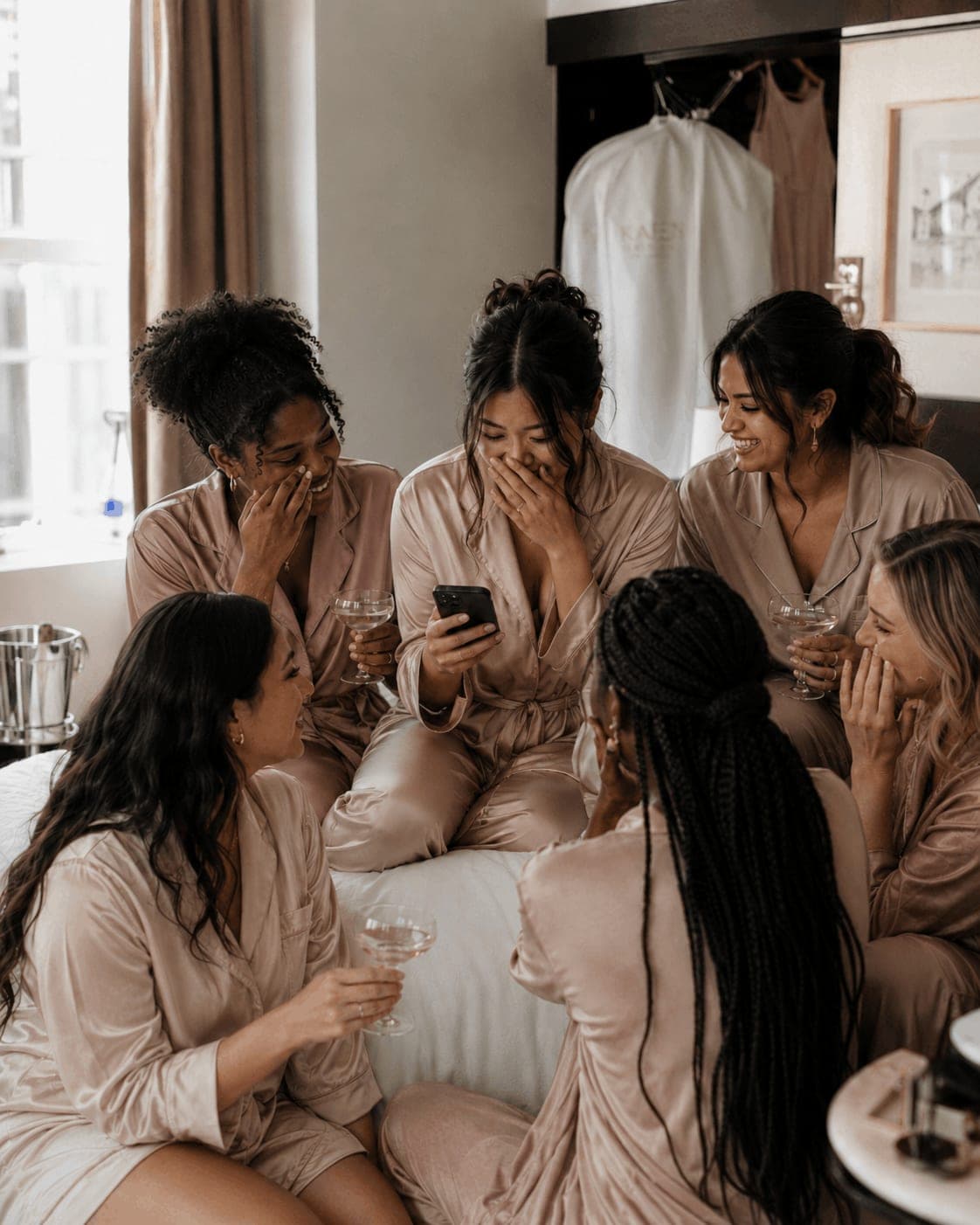
What makes a maid of honor speech actually good?
The goal is not to prove you have the longest history with the bride. The goal is to help the room see what you know about her.
A strong maid of honor speech has a generous point of view. It shows the bride's character through one or two specific memories, then connects that character to the relationship she is building. The details are what make it feel alive: the text she sends before a hard day, the way she turns errands into an event, the quiet loyalty that never asks for applause.
The safest speeches are not bland. They are specific without being exposing, funny without being sharp, and emotional without asking the room to sit inside private pain. If a story makes the bride feel recognized and protected at the same time, you are probably close.
Ask yourself: would the bride feel proud hearing this in front of her favorite people? If yes, keep going. If she would brace herself, choose another story.
The simple 5-part structure
Use structure as a guardrail, not a cage. It should make the speech easier to deliver.
Start with who you are and why you are speaking. Then move quickly into the bride's character, using one story that gives the room something to picture. After that, widen the lens to the couple, name what you have noticed about them together, and close with a toast that is short enough for everyone to repeat in their hearts.
- Open: who you are and the relationship you have with the bride.
- Set the lens: the quality you want the room to notice.
- Tell the story: one scene with a beginning, middle, and emotional point.
- Bring in the partner: what this relationship brings out in her or in both of them.
- Toast: a clear wish for the life they are building.
How to choose the right story
Most people get stuck because they have too many memories, not too few. Do not choose the wildest story. Choose the story that proves the kindest, truest thing you want to say.
A good wedding story is usually small enough to tell clearly. It might be a pickup from the airport, a couch conversation, the way she handled a friend's hard season, or the moment you realized her partner understood her. The story should show the bride at her best without turning her into a saint.
- Choose a story guests can understand without a full group-chat backstory.
- Look for a moment that reveals care, humor, courage, steadiness, or joy.
- Avoid stories where the punchline is embarrassment.
- Use one vivid detail: a phrase, place, object, or tiny habit.
Think of a time she showed up for someone when nobody was keeping score. That is often where the speech starts to sound real.
How to be funny without roasting too hard
Wedding humor should let everyone breathe. It should not make the bride wonder where the story is going. The safest jokes are affectionate observations: her planning style, her dramatic snack standards, her ability to make a five-minute errand into a full itinerary.
If the joke depends on exes, sex, drugs, heavy drinking, politics, religion, family trauma, appearance, intelligence, or humiliating secrets, cut it. The room should laugh with her, not at her.
Crowd-safe jokeShe is the friend who says, 'Let's keep it casual,' and then somehow creates a dinner reservation, backup reservation, and weather contingency.
Gentle pivotBut underneath the planning tabs and perfectly timed reminders is the real thing: she wants the people she loves to feel cared for.
How to talk about the couple
The most common maid of honor speech problem is spending four minutes on the bride and twenty seconds on the marriage. You do not need to pretend you know every private part of their relationship. You only need to name what you have witnessed.
Look for observable evidence: she seems more relaxed, they make ordinary things fun, they take each other seriously, they laugh in a way that resets the room. Speak from what you have seen, not from abstract claims about perfect love.
Couple observationWhat I love about the two of you is that your happiness looks steady. Not performative, not fragile, just deeply comfortable.
Bride-centered transitionI have always known her as someone who gives people a place to land. With you, I can see she has that place too.
How to end with a toast
A toast is not a second ending. It is one clean final wish. Make it concrete enough to feel personal and broad enough that the whole room can raise a glass to it.
You can write the ending before the opening if that helps. Often the toast tells you what the whole speech is about.
Toast exampleSo here is to a life full of easy laughter, brave honesty, and the kind of home where everyone can exhale.
Short maid of honor speech examples to adapt
Use these as rhythm and tone examples, not copy-paste speeches. The real version should come from your memories.
OpeningFor anyone I have not met yet, I am the person who has watched her turn ordinary Tuesdays into stories we still talk about.
Story setupThe moment I keep coming back to is not dramatic. It is the night she showed up with takeout, a phone charger, and absolutely no need to be thanked.
Couple lineWith you, she does not become someone else. She becomes even more herself, and somehow softer around the edges.
ClosingMay you keep choosing the ordinary, beautiful work of loving each other well.
Common mistakes
Keep the speech generous, specific, and safe for a mixed wedding room.
- Trying to cover the entire friendship instead of one emotional thread.
- Using inside jokes that only the bridal party can follow.
- Making the roast sharper than the affection.
- Waiting until the final line to mention the partner.
- Writing something that looks good on the page but feels unnatural out loud.
Final checklist
Run through this before you print it, practice it, or read it from your phone.
- I can read it in 2 to 4 minutes.
- The speech has one main story or theme.
- The humor is affectionate and crowd-safe.
- The partner and couple relationship are included.
- The final toast is clear, short, and easy to raise a glass to.
- Nothing in it would make the bride feel exposed.
Questions people ask before writing
How long should a maid of honor speech be?
Aim for 2 to 4 minutes. That is enough time for a warm opening, one strong story, a couple observation, and a toast.
Should a maid of honor speech be funny?
A little humor helps, but it should be affectionate. The speech does not need to feel like stand-up to be memorable.
What should I avoid mentioning?
Avoid exes, sex, drugs, excessive drinking, politics, religion, family trauma, humiliating secrets, appearance jokes, and anything the bride would not want shared publicly.
What if I get emotional?
Write shorter sentences near the end, print the speech clearly, and keep a one-line toast ready in case you need a simple landing.